
What Actually Causes a Blocked Drain
19 August 2026
Brown Arm Boys Drainage Brisbane
Grease, roots, wipes and old pipework are the usual suspects behind a blocked drain. Here's what's actually going on, and what to watch for before it stops working altogether.
Most people only think about their drains once one stops working. By then, the question isn't really "how do I fix this" so much as "how did this happen in the first place." Understanding what actually causes a blockage matters, because the fix that works for one cause can be completely useless for another, and knowing what to watch for can save a fair amount of trouble down the track.
Grease, Fat and Soap Build-Up
This is the most common cause by a wide margin, and it's rarely dramatic. Cooking fat, oil and grease go down the kitchen sink looking harmless enough as a liquid, but they cool and solidify as they travel through the pipe. Over weeks and months, that build-up coats the inside of the pipe like a slow-drying paint job, narrowing the usable diameter a little more each time. Soap works in a similar way. Bar soap in particular contains fats that react with minerals in water to form a waxy residue, which is why bathroom drains block just as often as kitchen ones, even though nothing solid ever went down them.
The frustrating part about grease and soap build-up is that it's almost invisible until it isn't. A drain can go from "draining a bit slower than it used to" to "not draining at all" within a fairly short window, because the last bit of narrowing tends to happen fast once the pipe's diameter gets small enough. Pouring hot water down the sink occasionally helps a little, but it doesn't shift build-up that's already hardened onto the pipe wall. That generally needs proper high-pressure jetting to clear.
Tree Root Intrusion
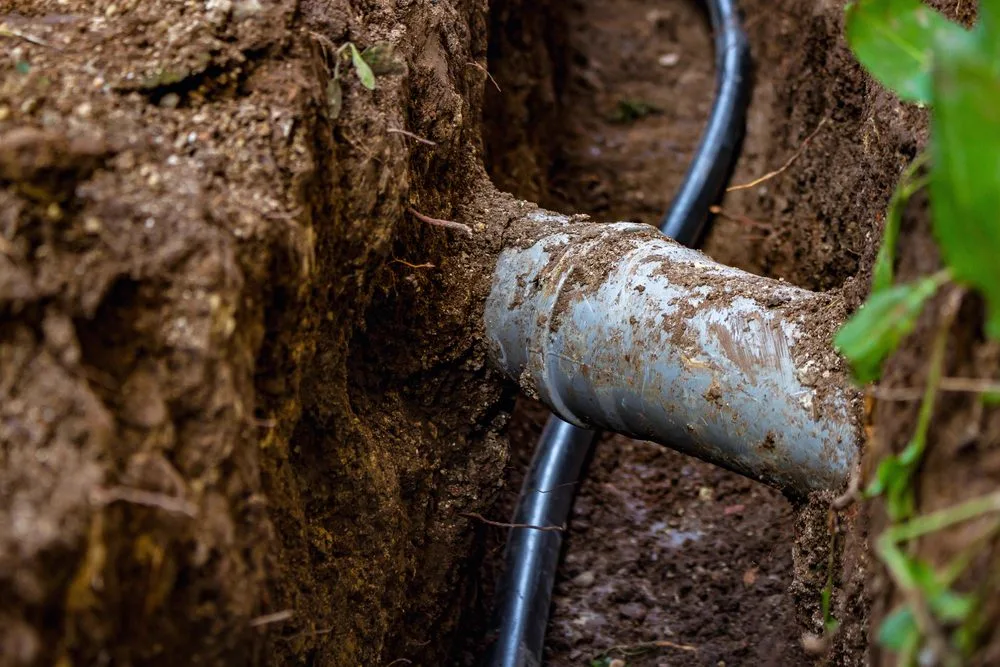
Roots don't smash through solid pipe, whatever the mental image might suggest. They're opportunists. A pipe joint with even a tiny gap, a hairline crack from ground movement, or a slightly misaligned section is enough for a root to find its way in, chasing the moisture and nutrients inside the pipe. Once a root gets a foothold, it doesn't stop. It keeps growing, other roots follow the same path, and eventually what started as a thread-like intrusion becomes a dense mass that catches every bit of paper, wipes and debris flowing past it.
This is particularly common on older properties with established gardens, where the drainage was laid decades before the trees above it reached full size. It's also one of the reasons a blockage in the same spot keeps coming back even after it's been cleared. Jetting or cutting back the roots deals with the immediate blockage, but if the crack or gap that let them in isn't addressed, the roots will find their way back in given enough time. That's usually the point where relining or a targeted pipe renewal becomes the more permanent fix, rather than repeating the same clear-out every year.
Foreign Objects and Things That Shouldn't Go Down a Drain
Some blockages are simply the result of something going down a drain that was never designed to carry it. Wet wipes are the biggest offender here, including the ones labelled "flushable," which in practice tend to hold together far longer than toilet paper and snag on the smallest imperfection in a pipe. Cotton buds, dental floss, hair, and small toys are common household culprits too, especially in bathroom drains.
In kitchens, food scraps are the usual issue, particularly starchy or fibrous ones like rice, pasta and vegetable peels, which expand or tangle rather than breaking down. None of these need to be enormous to cause a problem. A build-up of smaller items, wedged against a joint or a slight dip in the pipe, is often enough to catch everything that comes after it and form a genuine blockage.
Ageing or Damaged Pipework
Pipes don't last forever, and older materials in particular tend to develop problems as they age. Earthenware and fibre cement pipes, both common in properties built several decades ago, can crack, corrode or shift out of alignment over time. Ground movement, whether from tree roots, nearby construction, or simply the natural settling of soil, can misalign a joint just enough to catch debris that would otherwise flow straight through.
A pipe with a partial collapse creates a low point where water pools and debris settles instead of continuing on, which is exactly the kind of spot where a blockage tends to build. This kind of damage isn't something a routine clean will fix, since jetting a collapsed or badly cracked section can make the problem worse rather than better. A camera inspection is really the only reliable way to know whether a recurring blockage is coming from build-up or from actual structural damage further down the line.
Poor Original Installation
Not every blockage traces back to age or wear. Sometimes the issue was there from day one. A pipe installed with insufficient fall, meaning it doesn't slope enough for gravity to keep water moving at a proper pace, will always drain more slowly than it should and will always be more prone to build-up settling rather than washing through. Undersized pipework, installed to handle a smaller load than a property actually generates, runs into the same problem as a property is extended or its usage changes over time.
These issues tend to show up as a drain that's "always been a bit slow" rather than a sudden failure, which makes them easy to write off as normal. They're usually not. A proper assessment can confirm whether the issue is something that can be cleaned through, or whether the pipework itself needs upgrading to actually cope with what's being asked of it.
What To Do If You Suspect a Blockage
The earliest signs are usually easy to miss because they don't stop anything from working, they just make it work a little worse. Water draining more slowly than usual, gurgling sounds from a sink or toilet after use, and odours coming from a drain that weren't there before are all worth paying attention to. Left alone, these tend to get worse rather than better, and a partial blockage has a habit of becoming a complete one at the least convenient possible time.
The most reliable way to find out what's actually going on is a camera inspection. It removes the guesswork entirely, showing exactly where a blockage sits and what's causing it, whether that's grease, roots, a foreign object or something structural. From there, the right fix, whether that's jetting, mechanical clearing, root cutting or something more involved, actually matches the real problem instead of being a guess.
A Quick Note on Prevention
None of these causes are entirely avoidable, but a few small habits make a genuine difference. Scraping food scraps into the bin rather than the sink, letting cooking fat cool and go in the bin instead of down the drain, and being mindful of what actually goes into a toilet all reduce how quickly build-up accumulates. For properties with established trees nearby, periodic drain cleaning before a blockage develops is generally far less disruptive than dealing with a full blockage once it happens, since it clears build-up and root growth back before either becomes severe enough to stop water moving altogether.
If a drain in your home or business has been slow, noisy or smelling off lately, it's worth getting looked at before it turns into a full blockage. Call Brown Arm Boys Drainage Brisbane on (07) 3524 0700 and we'll take a look.
Drain doing something it shouldn't?
Fixed-price quote before anything starts, and the phone is answered around the clock.